
This Summer, we have experienced many days of excessively high temperatures and minimal rainfall. High temperatures combined with longer hours of daylight and minimal humidity makes it challenging to keep our gardens healthy and attractive.
During August, we are spending fewer hours outdoors. Therefore, we want to address our landscaping needs while restricting ourselves from extended outdoor exposure.
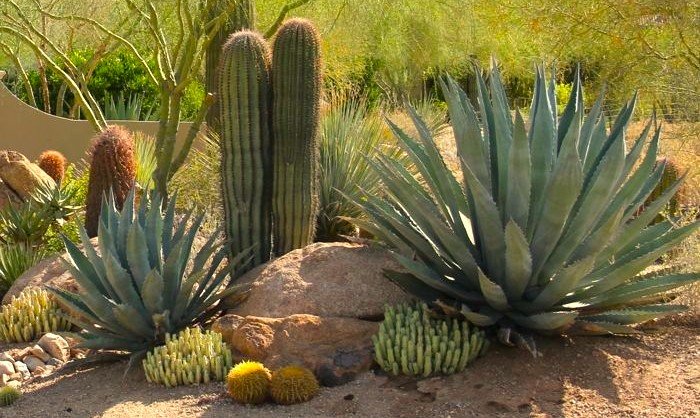
Our primary concern now is to provide adequate soil moisture to protect the plants. In August, non-native plants need to be irrigated twice a day (before sunrise and after dusk), six times a week for about ½ hour while native plants such as cactus, yucca and agave only need 10 minutes of irrigation once a week.
This illustrates that switching over to a desert landscape can save hundreds of gallons of water as well as lowering your water bill! Carefully examining your irrigation lines and drips for leakage can save water and money as well.
Remember that water lost by seeping into the soil, unlike “grey water” that goes down our home drains and sewer system, is water lost since it cannot be reclaimed and recycled by our water authority.
You can be proactive and reduce water usage while maintaining soil moisture by substituting rock mulch with wood mulch around your landscaping. This will conserve moisture and lower temperature soil dramatically, greatly protecting your landscape from heat, dehydration and sun damage.
In August, you should refrain from applying fertilizers to most non-native plants. Summer flowering plants such as lantana can be given high phosphorous content fertilizer such as Scotts Super Bloom to encourage blossoming while palm trees should be fertilized with specialized fertilizer.
If leaves on your plants, trees and bushes begin to turn yellow with green veins appearing; it may signal an iron deficiency that can lead to death. If this occurs, a dose of liquid iron spray can restore proper iron levels for photosynthesis.
In the summer months, continue to check for and effectively treat insect infestation that becomes prevalent when plants are weakened by the harsh temperature.
Have any questions? Contact me at: Theplantwhisperer28@gmail.com
