
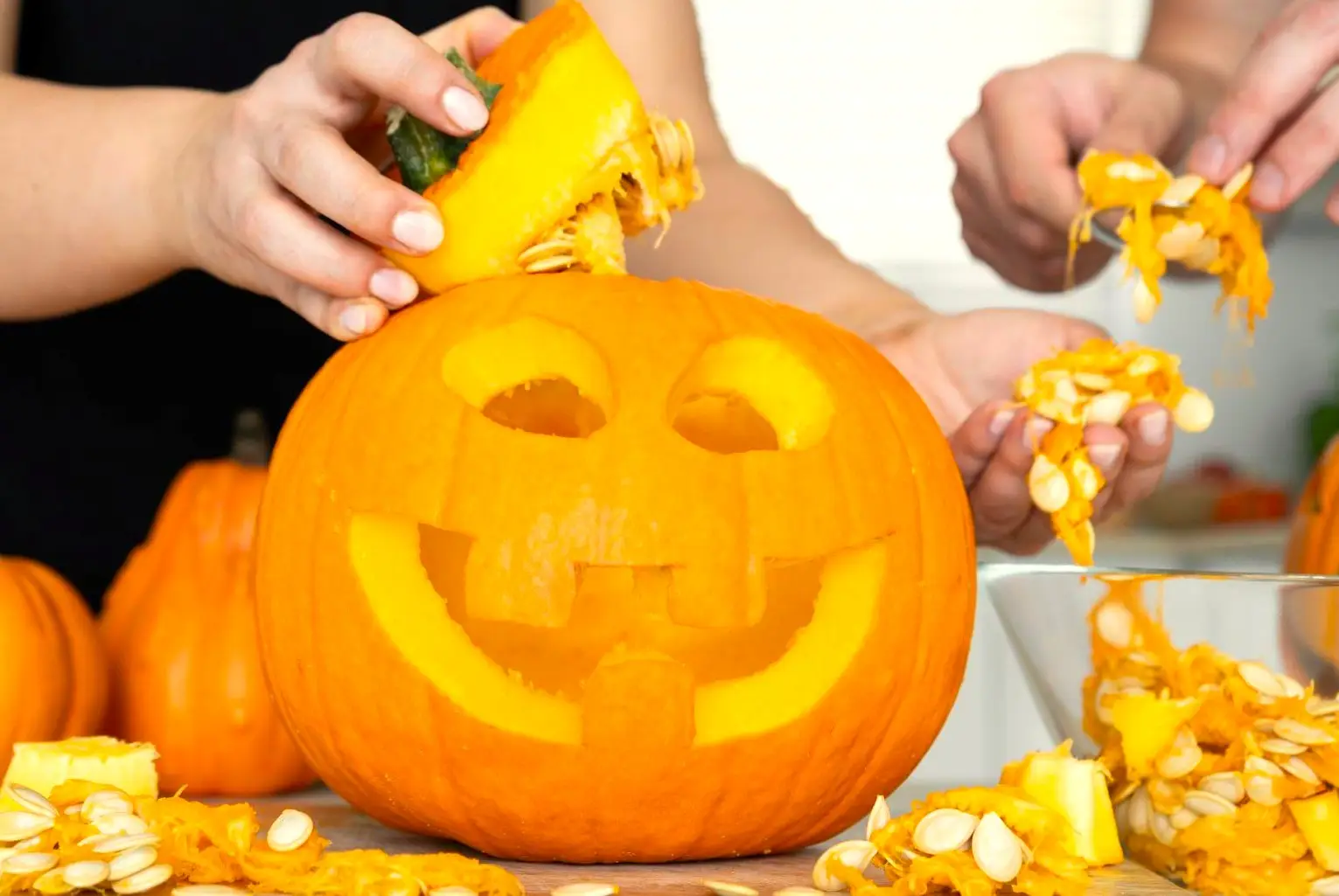
When Halloween became a national celebration in the 1950s, trick-or-treating also became popular. Most people, however, do not know how, why or when Halloween originated.
Halloween can be linked back over 2,000 years to Ireland, where there was a festival known as “Samhain” an old Celtic celebration marking both the end of the harvest season and the beginning of the New Year on November 1.
Because they thought that on the night of October 31st the boundary between the living and the dead was at its thinnest, they constructed holy bonfires and sacrificed animals as offerings in order to keep the wandering spirits at a distance. The Druid bonfires attracted a large number of insects, which then attracted an equal number of bats. It is thought that this is the origin of the connection between Halloween and bats.
The villagers came together and put on animal heads, skins, masks, and costumes in order that the deities should not recognize them. As a result, the Druids (who were the Celtic priests) were able to predict the future and offering comfort, and hope for the coming cold winter.
In 43 A.D. the Romans conquered the Celts and introduced their own religious calendars, including two autumn festivals similar to the Celtic Samhain celebration. Ironically, these also involved the belief in a thin veil separating the living from the dead.
Feralia was the festival which celebrated the dead, while Pomona Day was dedicated to the Roman goddess of fruit trees and orchards, the apple being their sacred symbol – a symbol which historians believe began our modern Halloween tradition of bobbing for apples.
In Celtic areas, Christianity had already made its presence felt and had its own objectives. Some popes were determined to get rid of the pagan rites and thus gradually started to combine the pagan festivals with religious events.
On November 2 All Souls’ Day was founded so that people could pray for the dead; All Saints’ Day (also known as All-Hallows), which was a day to celebrate saints and martyrs, was transferred to November 1, and October 31 came to be called All Hallows’ Eve, which later became known as Halloween.
America was introduced to this practice through massive immigration in the 1800s, and the first written account of trick-or-treating dates to 1928, after which it developed into the form it has today.
